How to choose a padel racket: An expert guide to elevate your game
Every dedicated player knows the distinct satisfaction of landing a clean shot. If you are looking to hit more precise bandejas and sharper víboras (overhead shots), the journey to improvement starts before you even set foot on the court. It all begins with the right equipment.
A racket that matches your swing and style of play can make a real difference. The right fit helps you play more comfortably, pick up new skills, and lower your risk of strain or injury, including tennis elbow.
This guide covers the basics of racket design: shape, balance, core materials, and carbon construction. Knowing how these elements work together can help you find a padel racket that feels right for your game and gives you more confidence on court.
Which padel racket shape matches your playing style?
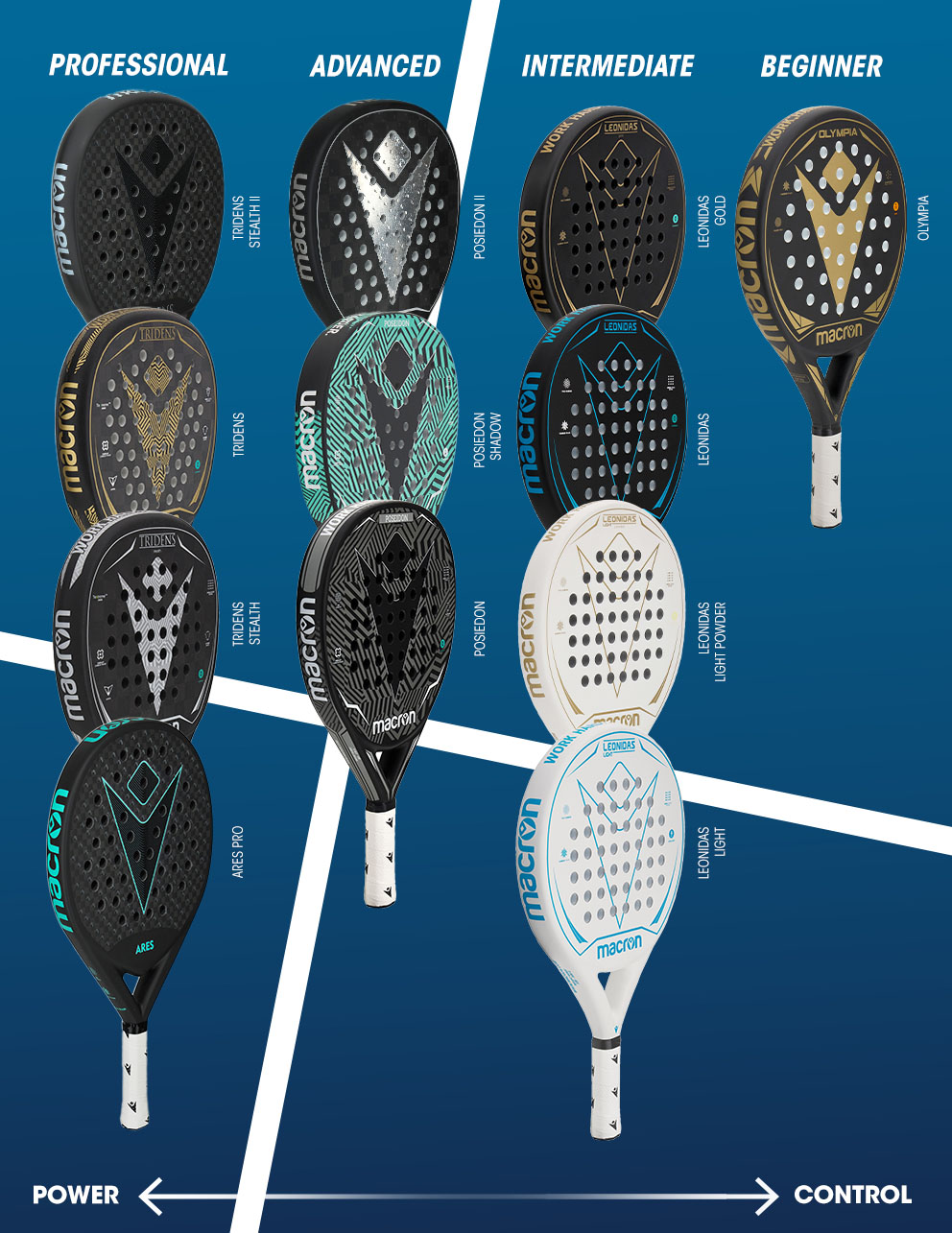
Racket shape is one of the first things to consider. It determines where the sweet spot (punto dulce) sits and how large it is. That sweet spot is the part of the racket that gives you the cleanest contact, along with the most control and efficient energy transfer, hence it is the perfect spot to hit the ball. Getting familiar with the different shapes is a good starting point for finding a padel racket that suits you.
Why should I choose a round padel racket?
Round rackets offer a large, central sweet spot, which makes them very forgiving. Even if your shot isn’t perfect, the round shape helps you guide the ball over the net. These rackets are helpful for learning defensive play, working on chiquitas, and keeping rallies going. Beginners often get the most out of them, though many experienced players who prefer control also stick with round rackets.
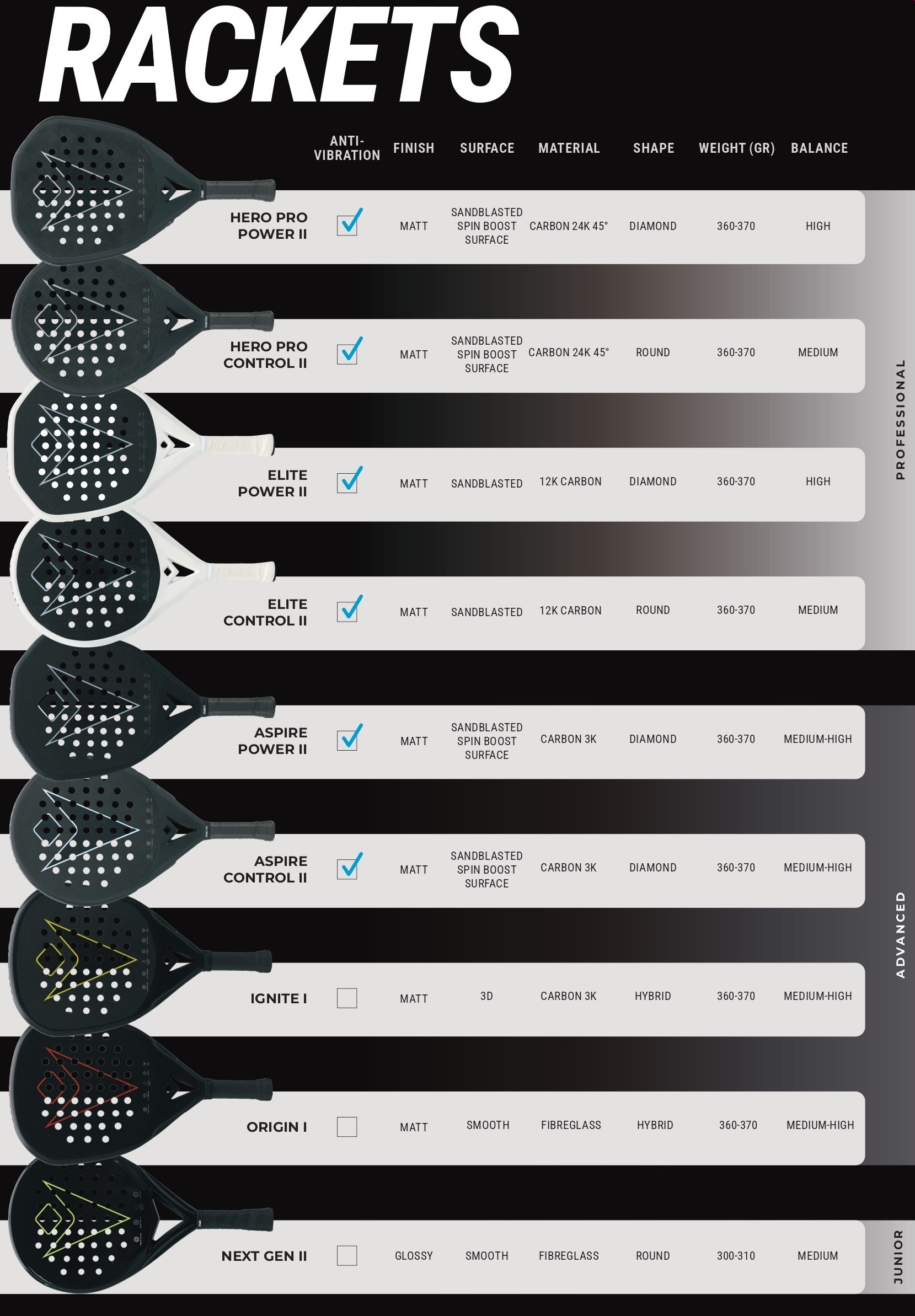
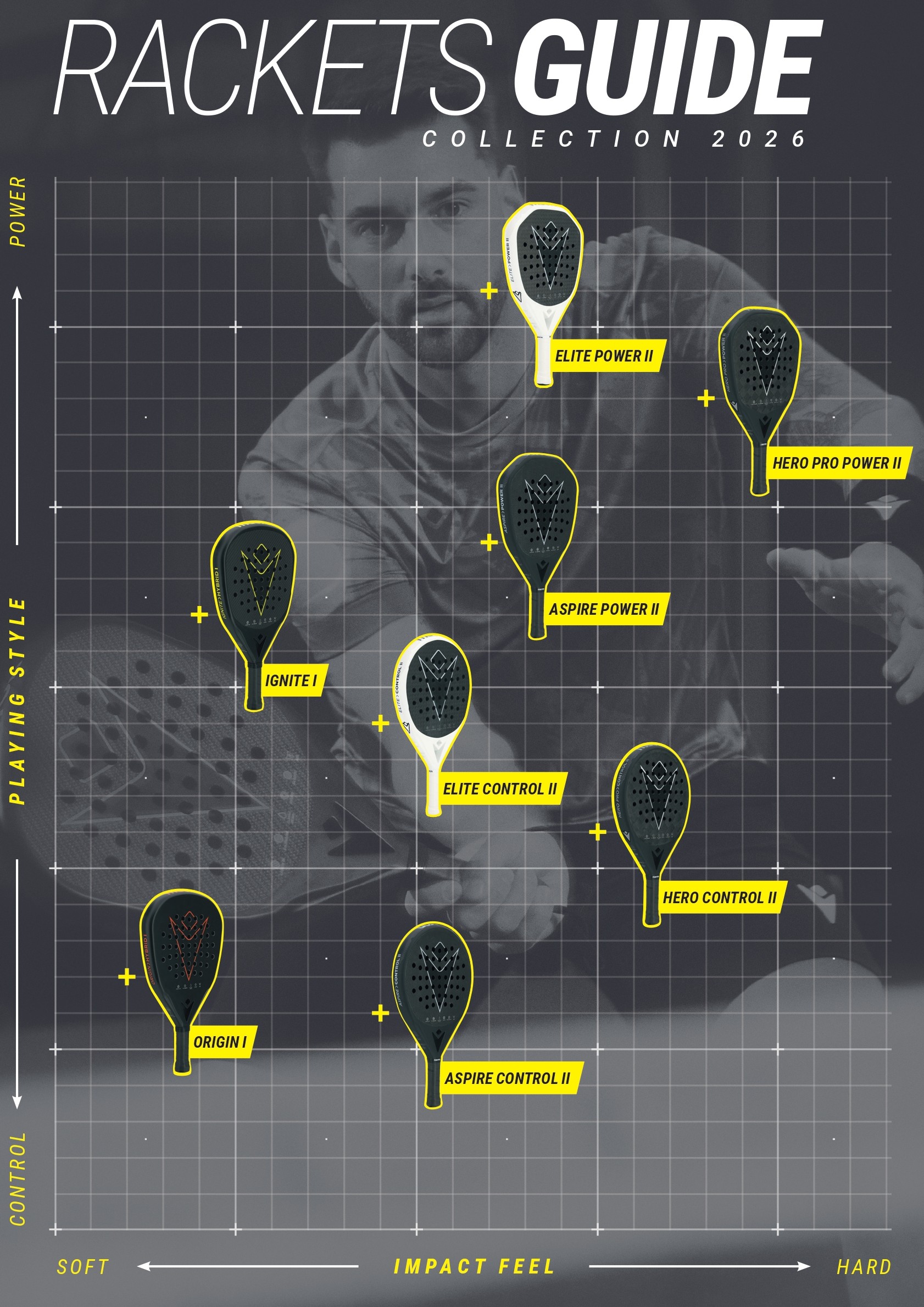
If you’re looking for maximum forgiveness, a round padel racket is a good place to start. For a bit more power, you might consider a model like the Aspire Control II.
When is a teardrop padel racket the better option?
Teardrop rackets have a sweet spot that sits a little higher on the face compared to round models. This shape offers a nice balance between power and control, which can be helpful for intermediate players who want a bit more pop on their bandeja but still need stability at the back of the court.
If you’re after versatility, a teardrop racket is worth considering. The Origin I is a good example of an adaptable model.
Who benefits most from a diamond padel racket?
Diamond rackets are designed with attacking play in mind. The sweet spot is located near the top of the head, which shifts the weight forward and helps generate extra power for smashes (remates). Players with a more aggressive style often prefer this shape.
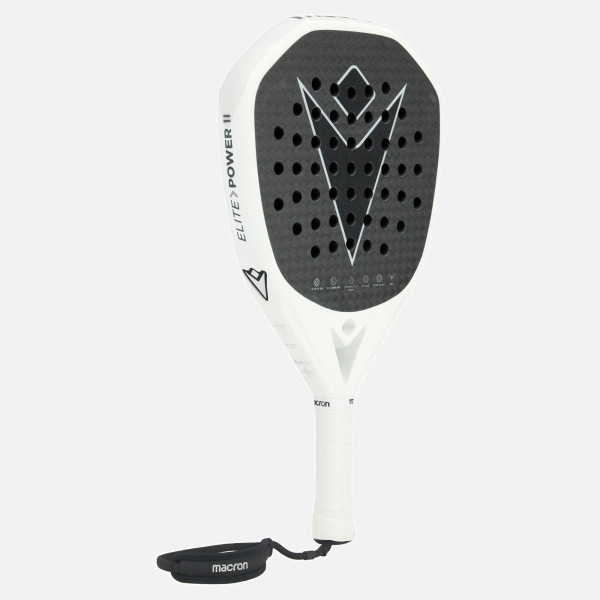
If you play an advanced attacking game, you might want to look at the Hero Pro Power II or our premier Elite Power II, both designed for players who like a diamond-shaped racket.
Pro Tip: Beginners may find diamond-shaped rackets harder to control due to the heavy head momentum created by the higher sweet spot. Players still developing timing and control will usually benefit from starting with a round or teardrop shape, which offers a more balanced feel.
What is the ideal padel racket weight for you?
Most adult padel rackets fall between 340 and 375 grams. Even a small change in weight, such as 20 grams, can affect how the racket feels in your hand and how your arm holds up over a long match.
Lighter rackets, usually between 340 and 355 grams, are easier to manoeuvre and can help reduce arm fatigue, especially when you’re playing at the net. Heavier rackets, starting around 360 grams, offer more stability and power for blocking strong shots. They require greater strength and conditioning, and may feel more demanding for players not yet used to the extra mass.
If you play regularly or find yourself in long matches, it’s worth remembering that fatigue can build up over time and affect your swing. Picking a racket that matches your current strength can help you stay comfortable and consistent throughout your session.
How does the padel racket balance point affect my swing?
Balance refers to how the weight is distributed along the racket.
- A head-heavy balance means more weight is toward the top of the racket. This can help you generate power for smashes, though it may feel a bit heavier to swing.
- Headlight rackets have more weight near the handle. This setup improves control and makes it easier to move the racket quickly, which is helpful for volleys.
- A medium balance means the weight is spread evenly, giving you a balanced feel that works well for a variety of playing styles.
Your physical condition can play a role in which balance feels best. Head-heavy rackets often suit players with strong swings, while head-light rackets are easier to handle during quick exchanges or when you’re starting to feel tired.
Does padel racket grip size matter?
Most padel rackets come with a standard grip size. Adjusting the grip to fit your hand is important for comfort and can help prevent injuries.
Adding an overgrip is an easy way to adjust the handle thickness for a more secure feel and better wrist snap. If the grip feels too small, you might find yourself squeezing too tightly, which can lead to tension or even elbow pain. If it’s too large, it becomes harder to flick your wrist for spin.
- Standard handles offer good control and comfort, making them a solid choice for players who rely on touch and need to change grip quickly.
- Thicker handles, created by adding extra overgrips, can provide more stability and help reduce wrist strain during powerful shots. The trade-off is that it may be a bit harder to adjust your grip quickly during fast exchanges.
Why do padel rackets have holes?
The pattern of holes on a padel racket is designed to improve aerodynamics and keep the frame strong.
- Air resistance reduction: Holes help reduce air resistance, so you can swing the racket faster and hit with less effort.
- Weight reduction: Drilling holes also removes material, which lowers the overall weight of the racket. This makes it easier to handle and can improve your reaction time.
- Hole sizes and placements: Hole placement influences how the sweet spot behaves and how the racket flexes during impact. Different drilling patterns can also affect vibration levels and overall feel.
What materials are padel rackets made from?
When choosing a padel racket, it’s helpful to look at what’s beneath the surface. Most rackets are made from several layers, each serving a different purpose.
- Racket handle: Handle material is key for vibration management, shock absorption, and comfort. Carbon fibre offers greater rigidity and shot precision, while fibreglass adds flexibility and forgiveness, making power easier to generate. A well-engineered handle reduces injury risk and helps you play longer without fatigue.
- Heart (Throat) and Core Stability: The heart connects the handle to the hitting surface and plays an important role in balance and feel. It is typically made from lightweight, durable materials like carbon fibre, fibreglass, or graphite to reinforce frame stability without adding weight. Manufacturers often use different material combinations to fine-tune responsiveness and performance.
- Head and Striking Surface: The outer layer of the racket is usually made from carbon or fibreglass. Fibreglass is flexible and elastic, which gives you good salida de bola (ball output) and makes it easier for the ball to bounce off the face. Carbon fibre is more rigid and durable, giving greater precision. You might notice a 'K' rating on carbon models, like 3K, 12K, or 24K. These indicate the number of carbon filaments per thread. Higher K ratings often change the feel and responsiveness of the surface, though overall stiffness depends on the full racket construction and carbon layup.
- Core Materials: EVA vs Foam: The core of the racket is typically made from either soft foam or hard EVA. Soft foam gives you more bounce and easy power, which can be helpful for defence. Hard EVA offers greater control and rewards faster swing speeds with more direct energy transfer.
What is the best padel racket for each skill level?
Choosing the right padel racket by level:
- Beginners often find round, flexible rackets easiest to use.
- Intermediate players may prefer teardrop hybrids.
- Advanced players often look for stiff diamond shapes with high-K carbon.
Match your skill level to the right racket shape and material for the best results.
Best padel rackets for beginners
Ideal Padel shape: Round rackets
Key Needs: Forgiveness, lightness, and a soft touch.
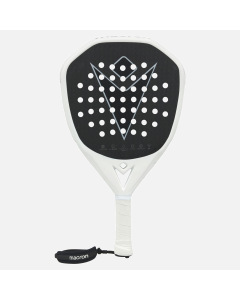
If you’re just starting out, choose a racket that supports your progress. A lightweight frame with a large sweet spot, like the Next Gen Padel Racket, helps you focus on footwork and technique without making errors from a small hitting area.
Best padel rackets for intermediates
Ideal Padel shape: Teardrop rackets
Key Needs: Versatility, progressive power, and balanced control.
As you start adding tactical shots like the bandeja and deep globos (lobs), a teardrop shape helps balance attack and defence. If you’re looking to pick up your pace, a Carbon 1K Padel racket like the Ignite gives good feedback. The Origin is a comfortable fibreglass option. If you want extra comfort, look for rackets with anti-vibration features to protect your joints.
Best padel rackets for advanced and pro players
Ideal Padel shape: Diamond rackets
Key Needs: Extreme stiffness, precise ball output, and pure aggressive power.
A medium balance padel racket offers medium balance for precision, while a high balance padel racket gives high balance for powerful smashes.
For top-level play, a 24K carbon racket is built for high-speed game, where every víbora needs to bite the glass. The Hero Pro Control II offers a reliable medium balance, while the Hero Pro Power II is our ultimate high-balance option for players seeking maximum power.

How to choose the right padel racket for your skill level
Here’s a simple checklist to help you find a padel racket that matches your current level and supports your progress.
- Identify your current skill level
- Choose racket shape first (round, teardrop, or diamond)
- Adjust racket weight to match your arm strength, fitness, and how long you usually play
- Consider balance depending on whether you prioritise power or control
- Select surface material based on technique (fibreglass for comfort, carbon for precision)
-Test grip thickness using overgrips to reduce arm strain
Common Mistake to Avoid: Avoid buying a stiff, diamond-shaped pro racket before you have mastered the basics. In a beginner’s hand, these rackets can feel unresponsive, making it harder to control your shots, and may even lead to arm pain.
Tabella di riferimento per livello
|
Level |
Category |
Profile |
Current Challenges / Developing Skills |
Best Padel Racket Shape |
Racket Needs |
|
1–2 |
Beginner |
Just starting out and learning basic grips and strokes. |
Reading the wall bounces and maintaining consistent rallies. |
Round |
Maximum forgiveness and a large punto dulce to keep the ball in play more easily. |
|
3–4 |
Intermediate |
Maintains rallies with greater consistency and uses the glass more confidently. |
Developing tactical shots such as the bandeja and defensive globos (lobs). |
Teardrop |
A versatile hybrid racket that balances power and control as technique improves. |
|
5 |
Advanced |
Plays at a faster pace and competes in local tournaments. |
Executing aggressive net play, spin variation, and consistent víboras or remates. |
Diamond |
A racket tailored to a defined playing style, often prioritising attacking performance. |
|
6–7 |
Professional / Elite |
Competes at a high level with refined technique and tactical awareness. |
Managing high-tempo rallies and minimising unforced errors under pressure. |
Diamond |
Highly specialised constructions with stiffer materials (such as high-K carbon) for maximum precision and energy transfer. |
Frequently Asked Questions
How do I know which type of racket to buy?
It helps to think about your main playing style. If you value consistency and defence, a round racket offers more control. If you like to finish points quickly, a diamond shape gives you extra power. Checking the sweet spot and racket balance can help you avoid arm strain and make sure the racket feels comfortable in your hands.
Should I get a rough or smooth padel racket?
The choice depends on your playing style. Rough surfaces, sometimes created with a sandpaper finish or 3D decals, give you more grip on the ball. This can help when you want to add slice to a víbora or hit with heavy topspin. Smooth finishes work well for flat, powerful drives where spin isn’t as important.
What is the lifespan of a padel racket?
If you play several times a week, you might need to replace your racket every 6 to 12 months. More casual players can often get one to two years out of their rackets. Over time, the EVA foam core loses its springiness, and the racket may start to feel less responsive.
Does the size of the holes affect the game?
Yes, the size of the holes does make a difference. Larger holes help reduce air resistance and make the racket easier to manoeuvre. Smaller holes keep the surface stiffer, which gives you a firmer, more solid feel when hitting heavy shots.
Why do padel rackets have different hole patterns?
Different hole patterns, whether circular, linear, or focused around the edges, are used to adjust the size and position of the sweet spot. Some designs also help the surface grip the ball, which can improve spin and control.
Which is the better padel racket option: hard or soft foam?
There isn’t a single best option. They serve different purposes. Soft foam has a high bounce, which gives you good ball output for easy defence and depth. Hard EVA foam offers less bounce but more precision, which can help when you want to play aggressively or control fast rallies.
Is it better to play with a light or heavy padel racket?
Lighter rackets can help with agility and improve your reaction time at the net. They also reduce arm fatigue during long matches. Heavier rackets, usually 365 grams and above, add power for blocking strong shots and hitting smashes, but they do require more strength to use safely.